
WELCOME BONUS 300%
UP TO €2000 + 100
FREE SPINS
UP TO €2000 + 100
FREE SPINS
Home → Games
Casino games at Greatwin
37 vs. 38 Sectors: One Zero Difference
The European Roulette wheel features 37 sectors, consisting of numbers one through thirty-six and a single zero, which creates a distinct mathematical environment for players seeking lower variance compared to its American counterpart. This structural difference directly influences the probability distribution of outcomes, as the presence of only one green pocket reduces the total number of possible results that do not involve a win on standard outside bets like Red or Black. Consequently, the player faces a significantly reduced risk profile when placing even-money wagers, as the house retains a smaller portion of the total volume over an extended period of play.
The American Roulette variant utilizes a wheel with 38 sectors, adding a double zero pocket alongside the standard single zero and numbered slots, which fundamentally alters the game's mathematical foundation. This additional sector increases the total number of outcomes without changing the payout structure for most bets, thereby shifting the expected value in favor of the establishment. The comparison between these two layouts highlights how a single extra pocket can dramatically change the long-term profitability of the game for the participant.
The European version offers a Return to Player rate of 98.65 percent, whereas the American layout provides an RTP of 94.74 percent, indicating a substantial gap in potential returns. This four-point-one-one percentage difference represents the cost of the extra zero, which effectively doubles the advantage held by the house in the American format. Players choosing the European wheel benefit from a more favorable statistical environment, preserving more of their bankroll over time compared to those playing the American variation.
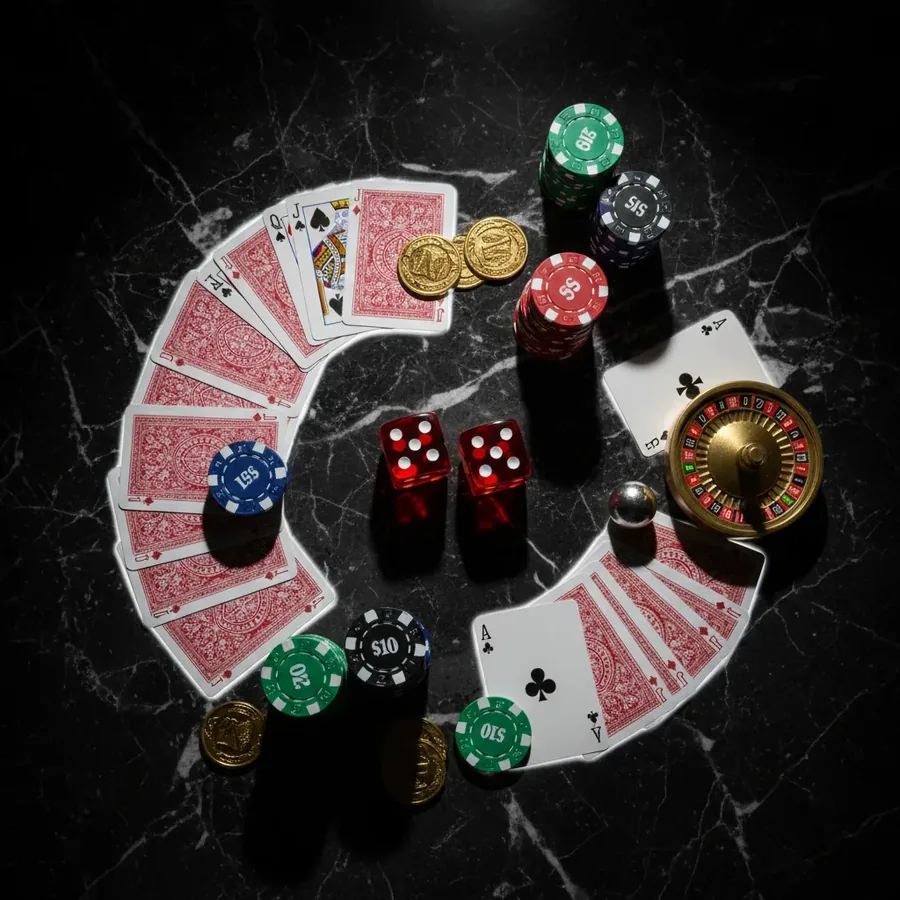
Why the Double Zero Almost Doubles the House Edge
The house edge in American Roulette stands at 5.26 percent, a figure derived from the twenty-eight losing numbers out of thirty-eight total sectors on the wheel layout. This percentage indicates that for every hundred euros wagered, the casino expects to retain approximately five euros and twenty-six cents as profit over the long run. The calculation is straightforward: the presence of the double zero creates two pockets that cause losses on bets that would otherwise win in a single-zero game.
In contrast, the French Roulette variant with La Partage rules offers a much lower house edge of 1.35 percent on even-money bets such as Red or Black. This significant reduction occurs because the La Partage rule refunds half of the stake when the ball lands on zero, effectively halving the penalty for hitting the single green pocket. The comparison demonstrates how specific rule modifications can drastically alter the mathematical expectation for the player.
The European standard without special rules maintains a house edge of 2.70 percent, which is exactly half of the American edge but still higher than the French La Partage variant. This intermediate position shows that while the single zero improves odds significantly over the double zero, additional rules like La Partage provide the best protection for the player's funds. Understanding these distinctions helps participants select games that align with their risk tolerance and bankroll management strategies.
The American double zero adds exactly 2.56 percentage points to the house edge compared to the standard European single zero game, creating a nearly doubled disadvantage for the bettor. This increase is purely mathematical, resulting from the expanded set of losing outcomes without any corresponding increase in payouts for winning combinations. Players aware of this statistic often avoid the American wheel unless specific promotional conditions offset the inherent mathematical disadvantage.
100 EUR bet, 50 rounds: the expected value
Placing a one hundred euro bet on the Pass Line in Craps yields a combined house edge of 0.37 percent when three-to-four-to-five times odds are allowed, resulting in a very low expected loss per unit wagered. Over fifty rounds of play, the theoretical loss calculates to eighteen cents per hundred euros bet, demonstrating the exceptional fairness of this specific table game compared to others available online. This minimal edge makes it one of the most statistically sound choices for disciplined players seeking to extend their playing time.
Roulette presents a starkly different financial reality, where a one hundred euro bet on American Roulette carries a house edge of 5.26 percent, leading to an expected loss of five euros and twenty-six cents per round. After fifty rounds, the cumulative expected loss reaches twenty-six euros and thirty cents, representing a significant erosion of the initial bankroll due to the higher mathematical disadvantage. This calculation underscores the importance of understanding game selection when managing a fixed budget for multiple sessions.
Video Poker Jacks or Better 9/6 offers a house edge of 0.46 percent with optimal strategy, meaning a one hundred euro wager theoretically loses forty-six cents over the long term. Over fifty rounds, the expected loss amounts to twenty-three cents per hundred euros, positioning it as a highly efficient game for skilled players who adhere strictly to the correct decision tree. The consistency of this return relies entirely on executing the perfect strategy for every hand dealt during the session.
Sic Bo Small or Big bets carry a house edge of 2.78 percent, which translates to an expected loss of two euros and seventy-eight cents for every one hundred euros wagered. Across fifty rounds, this results in a total expected loss of thirteen euros and ninety cents, reflecting the moderate risk associated with these even-money propositions in the dice game. Players must weigh this edge against the high volatility inherent in Sic Bo to determine if the potential for large wins justifies the steady drain on their balance.
Dozen 2:1: Twelve Numbers, One Third Coverage
The dozen bet in Roulette covers twelve numbers out of the thirty-seven or thirty-eight available sectors, providing one third of the board coverage with a payout ratio of 2 to 1. This structure means that for every one hundred euros wagered on a specific dozen, the player receives two hundred euros in profit upon a winning spin, excluding the original stake. The probability of winning stands at approximately thirty-two percent in European Roulette, balancing frequency of wins with moderate payout levels.
The expected value of a one hundred euro dozen bet in American Roulette, where the house edge is 5.26 percent, predicts a loss of five euros and twenty-six cents per spin. Over fifty rounds, the cumulative expected loss totals twenty-six euros and thirty cents, highlighting the impact of the double zero on frequent but lower-paying bets. This calculation illustrates how the mathematical advantage compounds over time, even when the player experiences regular small wins.
In European Roulette with a house edge of 2.70 percent, the same one hundred euro dozen bet yields an expected loss of two euros and seventy cents per round. After fifty spins, the total expected loss amounts to thirteen euros and fifty cents, offering a more favorable outcome than the American variant due to the single zero. The reduced edge allows for better bankroll preservation, making the European wheel the preferred choice for strategic players focusing on dozen wagers.
French Roulette with La Partage further improves the outlook for dozen bets by reducing the effective house edge to 1.35 percent on these even-money-adjacent wagers. A one hundred euro bet here results in an expected loss of one euro and thirty-five cents per round, totaling six euros and seventy-five cents over fifty rounds. This superior statistical treatment rewards players who seek games with the lowest possible mathematical disadvantage while maintaining consistent betting patterns on high-frequency outcomes.
Bankroll for 200 Rounds at 1 EUR
Maintaining a bankroll for two hundred rounds of Roulette at a one euro bet size requires careful consideration of the house edge to ensure sufficient funds survive variance. Assuming a European wheel with a 2.70 percent house edge, the expected loss over two hundred rounds is five euros and forty cents, suggesting a minimum starting balance significantly higher than this figure to absorb typical fluctuations. A prudent approach involves setting aside at least ten times the expected loss, or roughly sixty euros, to withstand downswings without immediate ruin.
American Roulette demands a larger buffer due to its 5.26 percent house edge, which predicts an expected loss of ten euros and fifty-two cents over two hundred one-euro rounds. To maintain stability and account for standard deviation, a bankroll of approximately thirty to fifty euros might be considered the absolute minimum, though many analysts recommend higher reserves. The doubled disadvantage of the double zero necessitates stricter bankroll management to prevent rapid depletion during unlucky streaks.
Craps Pass Line bets with full odds offer a combined house edge of just 0.37 percent, resulting in an expected loss of only seventy-four cents over two hundred one-euro rounds. This minimal theoretical drain allows for a much smaller bankroll requirement, potentially as low as fifteen to twenty euros, to sustain play through various hot and cold streaks. The efficiency of this game makes it ideal for players with limited budgets who wish to maximize their time at the table.
Video Poker Jacks or Better 9/6 presents a house edge of 0.46 percent, leading to an expected loss of ninety-two cents over two hundred one-euro hands. Similar to Craps, this low edge permits a manageable bankroll of around twenty euros to cover the inevitable variance encountered during a session. The consistency of returns in Video Poker, provided optimal strategy is used, offers a predictable path for bankroll preservation across numerous rounds of play.
Game categories at a glance
| Category | Examples | Stakes From | Highlight |
|---|---|---|---|
| Slots | Jammin' Jars, Gates of Olympus, Midas Golden Touch | 0,10 EUR | thousands of titles |
| Table games | Roulette, Blackjack, Baccarat | 0,50 EUR | classic rules |
| Live casino | Dream Catcher, Infinite Blackjack | 0,20 EUR | real dealers |
| Jackpot games | Mega Moolah, Divine Fortune, Age of the Gods | 0,20 EUR | progressive pools |
| Instant games | Aviator, Plinko, Mines | 0,10 EUR | fast rounds |
| Video poker | Jacks or Better, Deuces Wild | 0,25 EUR | strategy based |
Connection Lost in Table Game: Round Continues Automatically
Blackjack Split rules allow players to double down on up to four hands, increasing the volume of action during a session. This multiplication of bets means that connectivity issues can impact multiple simultaneous wagers rather than just one isolated bet. The system processes each hand independently, ensuring that a disconnection does not void the mathematical expectation of the game.
Video Poker Deuces Wild offers a theoretical return of 100.76 percent with optimal play, making it a unique high-value option. A sudden connection loss before the draw phase typically results in the hand being declared a push or forfeited depending on the software logic. Players must ensure their device remains connected to secure the negative house edge of minus 0.76 percent effectively.
Casino Hold'em requires a second Call bet equal to twice the Ante after the Flop is revealed, creating a distinct risk moment. If the connection drops during this decision window, the software may auto-fold the hand, causing the player to lose the Ante immediately. This rule highlights why stable internet is crucial for games involving sequential betting phases like Casino Hold'em.
French Roulette: La Partage Lowers to 1.35 Percent
French Roulette with the La Partage rule reduces the house edge on even-money bets to exactly 1.35 percent. When the ball lands on zero, half of the wager on Red/Black or Odd/Even is returned to the player instead of being lost entirely. This mechanism significantly improves the expected value compared to standard European roulette variants lacking this specific protection.
The payout structure maintains standard odds of 1:1 for outside bets like Manque/Passe while internal bets remain unaffected by La Partage. Straight bets still pay 35:1 and Corner bets pay 8:1, but these do not benefit from the half-refund rule. Consequently, the overall RTP for even-chance wagers sits at 98.65 percent, offering better long-term retention for the player.
American Roulette features a double zero sector which increases the house edge to 5.26 percent on identical even-money bets. The presence of both 0 and 00 sectors doubles the casino advantage compared to the single-zero French wheel. Players seeking lower volatility should strictly avoid American wheels in favor of the French variant with La Partage.
Baccarat in three steps: bet, reveal, compare
Baccarat Banker bets carry a house edge of only 1.06 percent when a 5 percent commission is applied to wins. The effective payout becomes 0.95:1, reflecting the fee deducted from every winning Banker wager. This commission structure compensates for the statistical advantage the Banker hand holds due to drawing rules.
The Baccarat Tie bet pays 8:1 but suffers from a massive house edge of 14.36 percent, making it the worst main wager. Standard deviation for this side bet reaches 2.64, indicating extremely high volatility and rapid bankroll depletion. Smart players exclude this option from their strategy to preserve capital over extended sessions.
Player bets offer a slightly higher house edge than Banker but lack the commission deduction, resulting in a different risk profile. The game flow involves placing a chip, revealing two cards per hand, and comparing totals to nine without complex decisions. This simplicity allows for fast gameplay where hundreds of rounds can occur per hour.
Martingale Fails After 8 Rounds at Table Limit
Craps Free Odds bets provide a 100.00 percent RTP because they pay at true odds without any house advantage. Combining Pass Line with 3-4-5x odds reduces the combined house edge to just 0.37 percent on the total action. This mathematical certainty makes Craps superior to most table games for strategic players minimizing variance.
Blackjack with 6:5 payouts increases the house edge by exactly 1.39 percentage points compared to the standard 3:2 rule. On a $10 bet, the player receives $12 instead of the customary $15 for a natural Blackjack. This reduction in payout drastically erodes the profitability of basic strategy over thousands of hands.
Sic Bo Small and Big bets offer a house edge of 2.78 percent under Atlantic City rules, making them the best options in the game. Triplets cause losses on both Small and Big wagers, restricting the appeal of these seemingly safe even-money bets. Specific Triple bets pay 180:1 but carry an edge of 16.20 percent, demonstrating the trade-off between payout size and probability.
Video Poker 9/6: What the Two Numbers Mean
Jacks or Better 9/6 Full Pay video poker returns 99.54 percent with optimal strategy, requiring a maximum bet of five coins. The Royal Flush bonus jumps to 4000 coins for five-wager bets, compared to 800 coins for single coin play. Missing this max bet requirement reduces the overall RTP below the theoretical maximum.
The notation 9/6 refers specifically to the payout for a Full House (9 coins) and a Flush (6 coins) per unit wagered. Any deviation from these tables, such as 8/5 or 7/5 versions, significantly lowers the return percentage. Players must verify the paytable before sitting down to ensure they are playing the full-pay version.
Deuces Wild Full Pay offers a rare positive expectation of 100.76 percent RTP with perfect play and maximum wagers. All four deuces act as wildcards, enabling Five of a Kind and other premium combinations. However, any strategic error immediately pushes the RTP below 100 percent, demanding strict discipline from the player.
Four Blackjack Hand Decisions at a Glance
The decision to split Aces allows players to maximize potential payouts by creating two separate hands from a pair. This rule improves the Return to Player (RTP) by 0.08 percentage points compared to standard restrictions that limit re-splitting. The mathematical advantage stems from reducing the house edge, making it a critical factor for optimal strategy.
Dealer rules regarding soft 17 significantly impact the expected value of every hand dealt during a session. When the dealer hits on soft 17, the house edge increases by 0.22 percentage points, negatively affecting player returns. Players must adjust their basic strategy accordingly to mitigate this specific disadvantage inherent in the game rules.
Double after split represents another favorable rule modification that enhances the long-term profitability of blackjack sessions. Allowing players to double down after splitting pairs improves the RTP by approximately 0.14 percentage points. This flexibility provides additional opportunities to capitalize on strong starting cards against weak dealer up-cards.
Punto Banco: 5 Percent Commission on Banker Wins
Baccarat Banker bets offer the lowest house edge among major table games at just 1.06 percent. This statistical advantage comes with a mandatory 5 percent commission on all winning wagers placed on the banker. The effective payout becomes 0.95 to 1 instead of the standard even money ratio used in other scenarios.
The 5 percent fee compensates for the banker's inherent positional advantage in drawing the third card. Without this commission structure, the casino would face a negative expected value due to the higher win probability. The 98.94 percent RTP reflects the net return after accounting for these deducted winnings over time.
Standard deviation remains low at 0.93, indicating consistent and predictable results for bankroll management. Players seeking stable returns should prioritize banker bets despite the immediate deduction from profits. The combination of low variance and high RTP makes this option mathematically superior to tie bets.
Three Roulette Variants, Three House Edges Compared
American Roulette features a double zero pocket alongside numbers one through thirty-six, totaling thirty-eight sectors. This extra green slot doubles the house edge to 5.26 percent compared to single zero versions. Straight bets pay 35 to 1, but the presence of the additional zero reduces overall player retention.
European Roulette eliminates the double zero, resulting in a lower house edge of 2.70 percent across all bets. The simplified wheel layout improves odds for players engaging in both inside and outside wagering strategies. Column and dozen bets maintain their 2 to 1 payout while benefiting from the reduced casino advantage.
French Roulette incorporates the La Partage rule, which refunds half of even-money bets when the ball lands on zero. This mechanism lowers the house edge further to 1.35 percent for red/black and odd/even wagers. Inner bets like splits and corners remain unaffected by this protective rule for casual players.
Roulette Wheel with 37 vs 38 Pockets
A European wheel contains thirty-seven pockets ranging from zero to thirty-six, establishing the baseline for standard roulette odds. The absence of the double zero ensures that the house retains only 2.70 percent of total wagers over time. This configuration offers better value than American variants while maintaining familiar betting structures for enthusiasts.
An American wheel expands the field to thirty-eight pockets by adding an extra double zero sector to the layout. This modification directly causes the house edge to rise to 5.26 percent, effectively halving player expectations. Every spin carries increased risk due to the larger number of losing outcomes available on the physical wheel.
Comparing these two layouts highlights how a single pocket difference drastically alters long-term financial projections. The twenty-one percent increase in house edge between European and American wheels impacts bankroll sustainability significantly. Players prioritizing mathematical efficiency should exclusively seek out tables featuring the thirty-seven pocket design.
Split bets pay 17 to 1 on both wheel types, but the probability of hitting such combinations differs slightly. Corner bets offering 8 to 1 returns face similar probabilistic shifts depending on the specific wheel variant chosen. Understanding these nuances helps players make informed decisions about where to allocate their gambling funds effectively.
Keno and Bingo with RTP Between 92 and 95
Sic Bo Special Bets present varying levels of risk with house edges ranging from 7.87 percent to 18.52 percent. Single Number wagers provide the best value within this category, offering a 7.87 percent house edge. Specific Double bets represent the worst option, carrying a steep 18.52 percent disadvantage for participants.
Return to Player percentages for Sic Bo specializations span from 81.48 percent to 92.13 percent depending on the bet type. Any Triple bets pay 30 to 1 with a 13.89 percent house edge, balancing risk and reward. Specific Triple bets yield higher payouts of 180 to 1 but suffer from a much higher 16.20 percent disadvantage.
Small and Big bets in Sic Bo operate under Atlantic City rules with a house edge of 2.78 percent. These wagers cover sums from four to ten for Small and eleven to seventeen for Big outcomes. Drilling results in losses for both sides, reinforcing the importance of understanding specific game mechanics before playing.
Contact
Live - online chat
Banking









Providers












Greatwin Casino 2026